
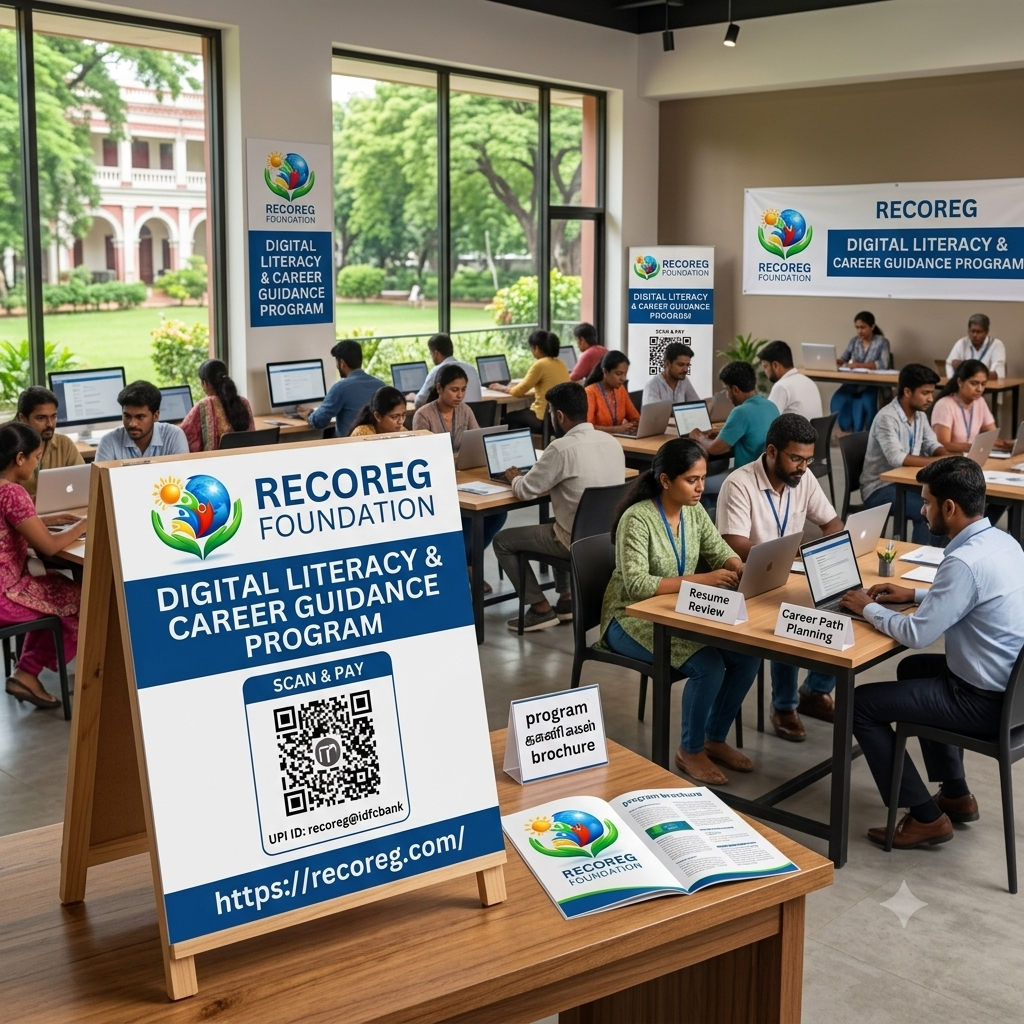

Digital Literacy & Career Guidance Program
Purpose and Objectives
Equip participants with practical digital literacy so they can confidently use devices, the internet, and online tools for learning, work, and everyday life.
Provide career awareness and counselling that helps individuals understand options, match their interests and skills to pathways, and plan next steps.
Reduce inequality in access to information and opportunities by supporting those who lack exposure to technology or professional guidance at home or school.
Target Group
Senior school students, college youth, and job seekers who need both basic-to-intermediate digital skills and clarity on future career choices.
Women, first‑generation learners, migrants, and under‑served communities with limited access to career counselling and digital tools.
Adults seeking upskilling or career transitions who require foundational digital capabilities to participate in modern labour markets.
Digital Literacy Components
Fundamentals: using computers and smartphones, operating systems, file management, basic troubleshooting, and secure password practices.
Internet skills: browsing, search strategies, evaluating information reliability, using email, video calls, and collaboration platforms safely and effectively.
Workplace‑oriented skills: office productivity tools, online forms, digital payments, basic data handling, and familiarity with online learning platforms.
Career Guidance Components
Self‑assessment of interests, strengths, and values using simple tools and facilitated exercises to identify suitable career directions.
Information on education and training options (courses, certifications, apprenticeships), sector overviews, and emerging job roles in the digital economy.
One‑to‑one or small‑group counselling support to help participants build career plans, set goals, and understand realistic steps and timelines.
Employability and Soft Skills
Foundational employability training covering communication, teamwork, problem‑solving, professionalism, and basic workplace etiquette.
Guidance on creating digital CVs, online profiles, and using job portals and professional networks for applications and networking.
Practice sessions such as mock interviews, group discussions, and role plays delivered with digital tools where possible.
Delivery and Methodology
Blended model combining in‑person workshops with online modules, videos, and interactive exercises to build both tech use and self‑guided learning habits.
Modular curriculum so participants at different starting levels can engage with appropriate content (basic, intermediate, or advanced).
Continuous assessment through small tasks, quizzes, and practical assignments that demonstrate both digital usage and career planning progress.
Inclusion and Safeguards
Special consideration for learners with low literacy or limited prior exposure to technology, using simple language and step‑by‑step demonstrations.
Attention to privacy, online safety, and ethical digital behaviour, including managing personal data and avoiding scams or harmful content.
Efforts to ensure gender sensitivity and reach marginalized groups so that digital and career opportunities do not remain limited to a privileged few.
Expected Outcomes
Participants become confident, safe users of digital tools and platforms, able to access information, services, and learning independently.
Clearer, more actionable career plans, with individuals better able to choose subjects, courses, or entry‑level jobs aligned to their profiles.
Improved employability and readiness for a technology‑driven labour market, including better use of online applications and professional networking.
